Thermal Imaging for Hidden Moisture
Thermal imaging for hidden moisture provides accurate water detection for homes, offices, and industrial spaces—ensuring lasting protection.
What Is Thermal Imaging for Hidden Moisture
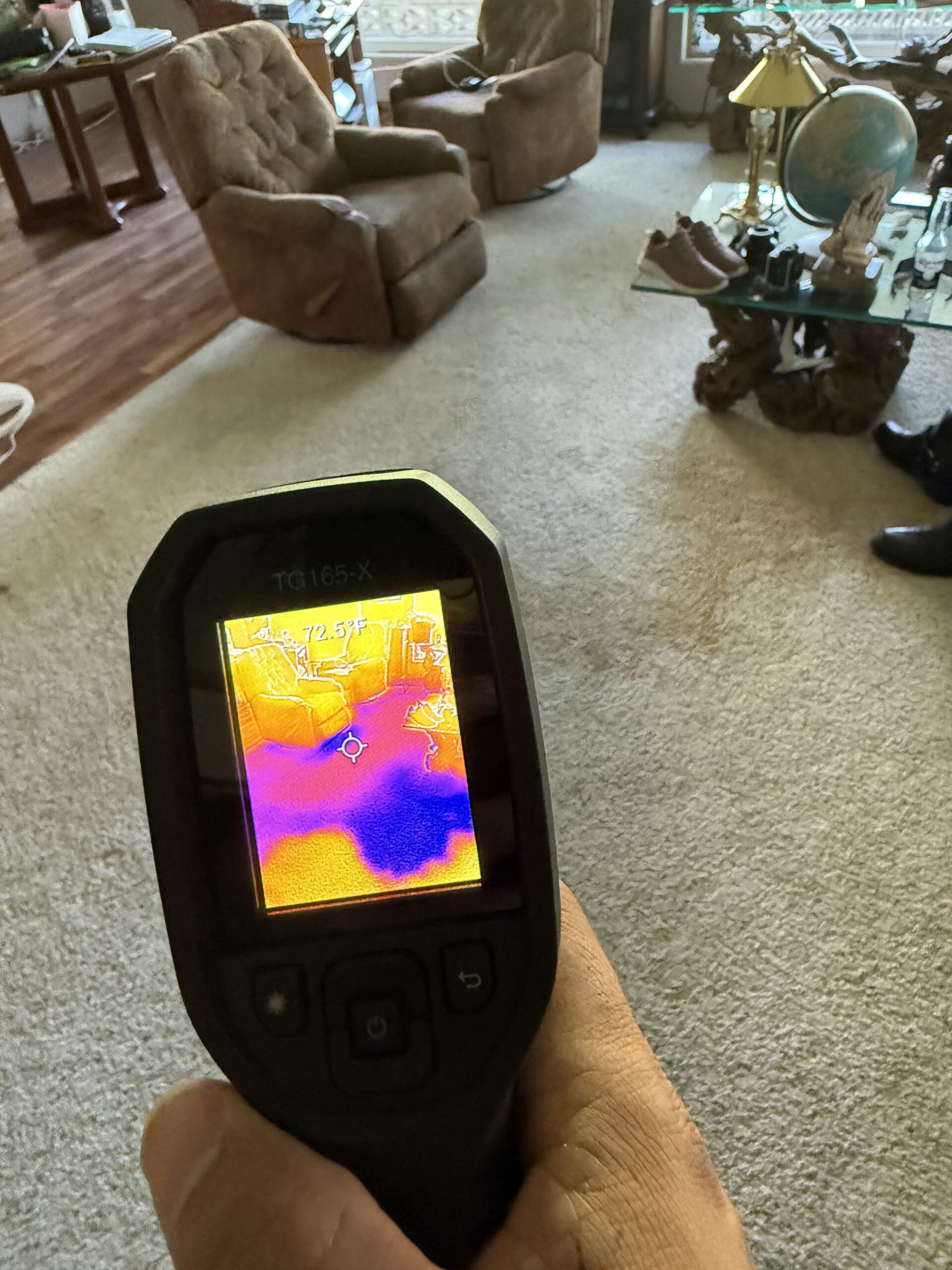
Thermal imaging for hidden moisture is a non-invasive method used to locate trapped water within walls, ceilings, and floors. Using infrared camera technology, technicians can detect temperature differences caused by moisture that isn’t visible to the naked eye. These images reveal the exact areas affected by leaks or water damage, allowing for targeted drying and repairs.
Thermal imaging helps prevent mold growth, structural damage, and unnecessary demolition by identifying hidden moisture quickly and accurately. It’s an essential tool in water damage restoration, ensuring your property is completely dry, safe, and restored to pre-loss condition.
FAQ's About Thermal Imaging for Hidden Moisture
1. How does thermal imaging detect moisture?
Moisture absorbs and releases heat differently than dry materials. Infrared cameras capture these subtle temperature variations to pinpoint wet areas quickly and accurately.
2. Is thermal imaging safe and non-invasive?
Yes. Thermal imaging is completely safe and non-destructive—it detects moisture without drilling holes or removing drywall.
3. What types of damage can it identify?
Thermal imaging helps locate leaks, condensation, plumbing failures, and water intrusion before visible damage or mold growth occurs.
4. When should I schedule a thermal imaging inspection?
Schedule an inspection after leaks, floods, or unexplained humidity issues to identify hidden moisture and prevent costly long-term damage.